
Rounding Whole Numbers
Rounding is used to make numbers simpler while keeping them close to their original value. In GCSE Maths, you must be able to round whole numbers to the nearest 10, 100, 1,000 and higher powers of 10.
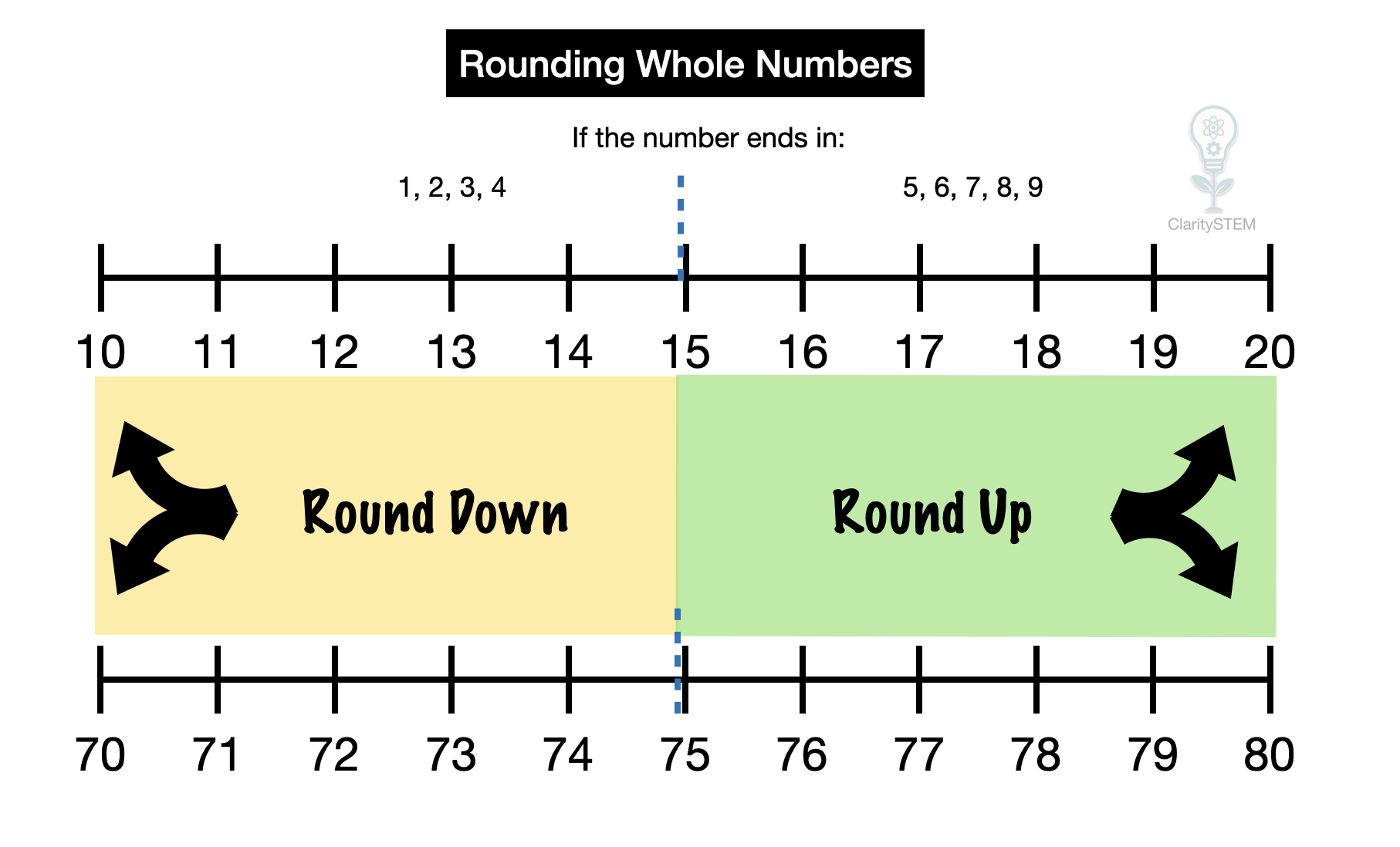
To round a number:
- Decide which place value you are rounding to
- Look at the digit to the right of that place value
If that digit is 5 or more, round up.
If it is 4 or less, round down.
Examples:
- 47 rounded to the nearest 10 is 50
- 432 rounded to the nearest 100 is 400
- 6,728 rounded to the nearest 1,000 is 7,000
When rounding, all digits to the right of the rounding place become zeros.
Rounding is commonly used to estimate answers, check calculations, and interpret real-world data. You should be comfortable rounding numbers of any size quickly and accurately.