
Line Symmetry
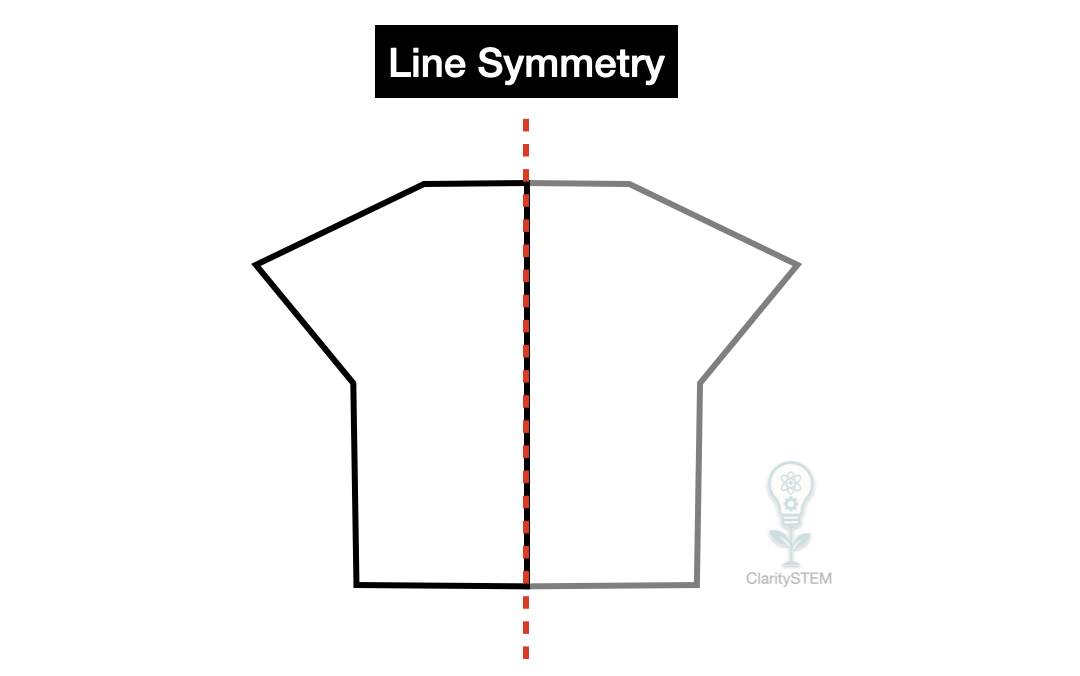
Line symmetry describes when a shape can be divided into two identical halves by a straight line. Each half is a mirror image of the other.
What Line Symmetry Means
A shape has line symmetry if there is a line that splits the shape so that:
• both sides are exactly the same shape
• corresponding points are the same distance from the line
• one side is the mirror image of the other
This line is called a line of symmetry.
If a shape can be folded along this line and the edges match exactly, the shape has line symmetry.
Describing Line Symmetry
When describing line symmetry, it is important to state:
• whether the shape has line symmetry or not
• how many lines of symmetry the shape has
• the direction of each line of symmetry
Lines of symmetry can be:
• vertical
• horizontal
• diagonal
Some shapes have more than one line of symmetry.
Examples of Line Symmetry in Common Shapes
A square has four lines of symmetry:
• one vertical
• one horizontal
• two diagonal
A rectangle has two lines of symmetry:
• one vertical
• one horizontal
A triangle may or may not have line symmetry:
• an equilateral triangle has three lines of symmetry
• an isosceles triangle has one line of symmetry
• a scalene triangle has no lines of symmetry
A circle has infinitely many lines of symmetry because any line through the centre divides it into two equal halves.
An irregular shape may have no lines of symmetry.
Drawing Shapes with Line Symmetry
To draw a shape with line symmetry:
• draw the line of symmetry first
• draw one half of the shape on one side of the line
• reflect each point across the line to draw the other half
Each point must be the same distance from the line of symmetry on both sides.
When drawing on squared paper, counting squares helps keep distances equal.
Always reflect points at right angles to the line of symmetry
Identifying Lines of Symmetry
To identify lines of symmetry in a shape:
• imagine folding the shape along a line
• check whether the two halves match exactly
• test different directions if needed
Only straight lines count as lines of symmetry.
Key Points to Remember
A line of symmetry divides a shape into two identical halves.
The halves are mirror images of each other.
Shapes can have zero, one or many lines of symmetry.
Lines of symmetry can be vertical, horizontal or diagonal.
Drawing one half and reflecting it helps create symmetric shapes.
Understanding line symmetry helps describe, analyse and construct shapes accurately in geometry.