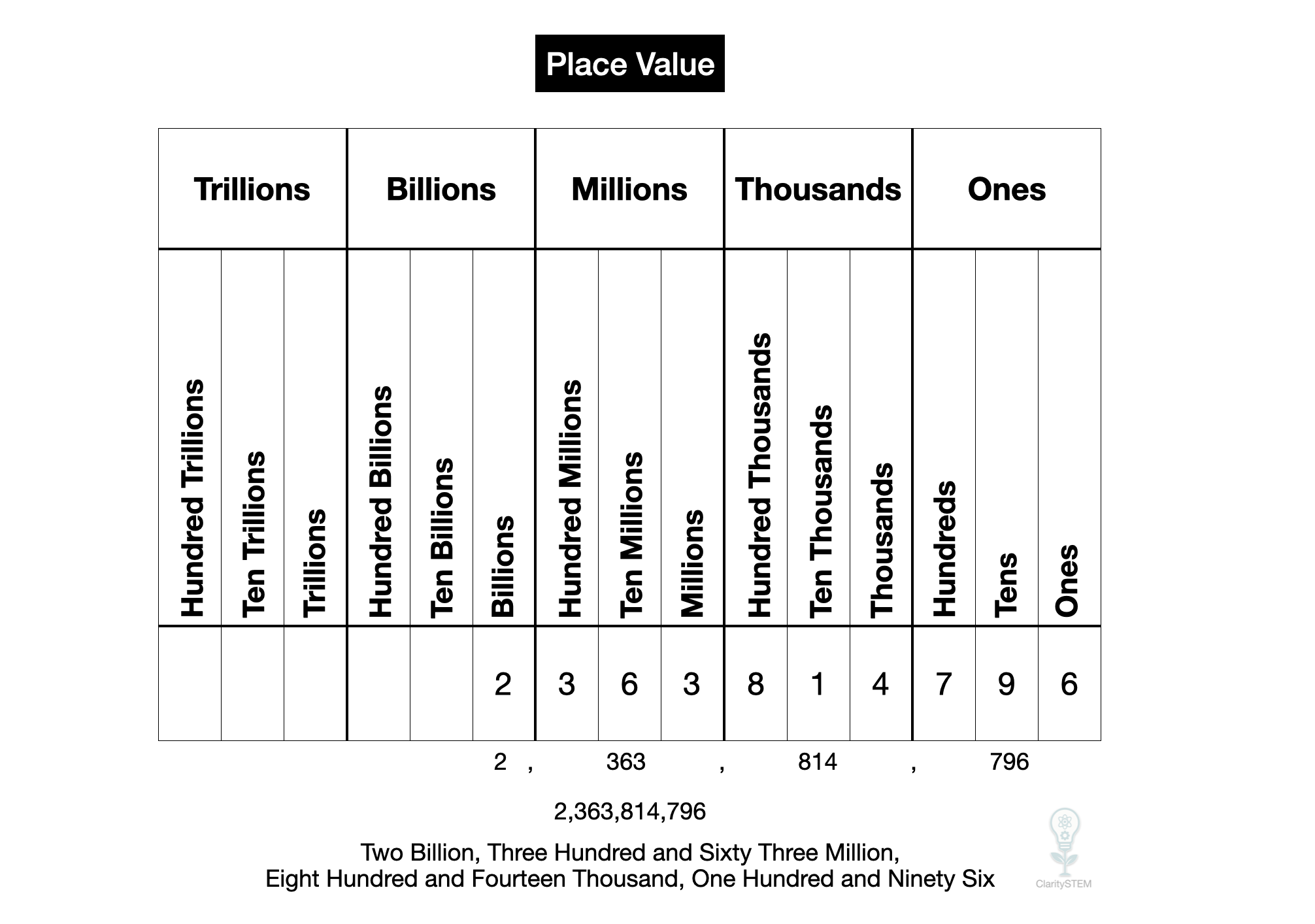
Reading and Writing Numbers of Any Size
Whole numbers are positive integers, including zero. In GCSE Maths, you must be able to read and write whole numbers of any size accurately.
Numbers can be written in figures (digits) or in words. For example:
4,300 → four thousand three hundred
1,025,000 → one million, twenty-five thousand
Large numbers are read using place value, where each digit has a value depending on its position (units, tens, hundreds, thousands, millions, and so on). Commas are used every three digits to make large numbers easier to read.
Zeros act as placeholders. They show that there is no value in a particular place, but they still affect the size of the number.
402 ≠ 4,020 ≠ 40,200
When writing numbers in words, every place value must be considered, even where zeros appear.
You should be able to:
- Read whole numbers of any magnitude
- Write numbers correctly in figures
- Write numbers correctly in words
Recognise the role of zeros as placeholders