
Geometric Terms
Geometry uses specific words to describe shapes, positions, directions and turns. Understanding these geometric terms is essential for describing diagrams accurately and solving problems clearly.
Points, Lines and Planes
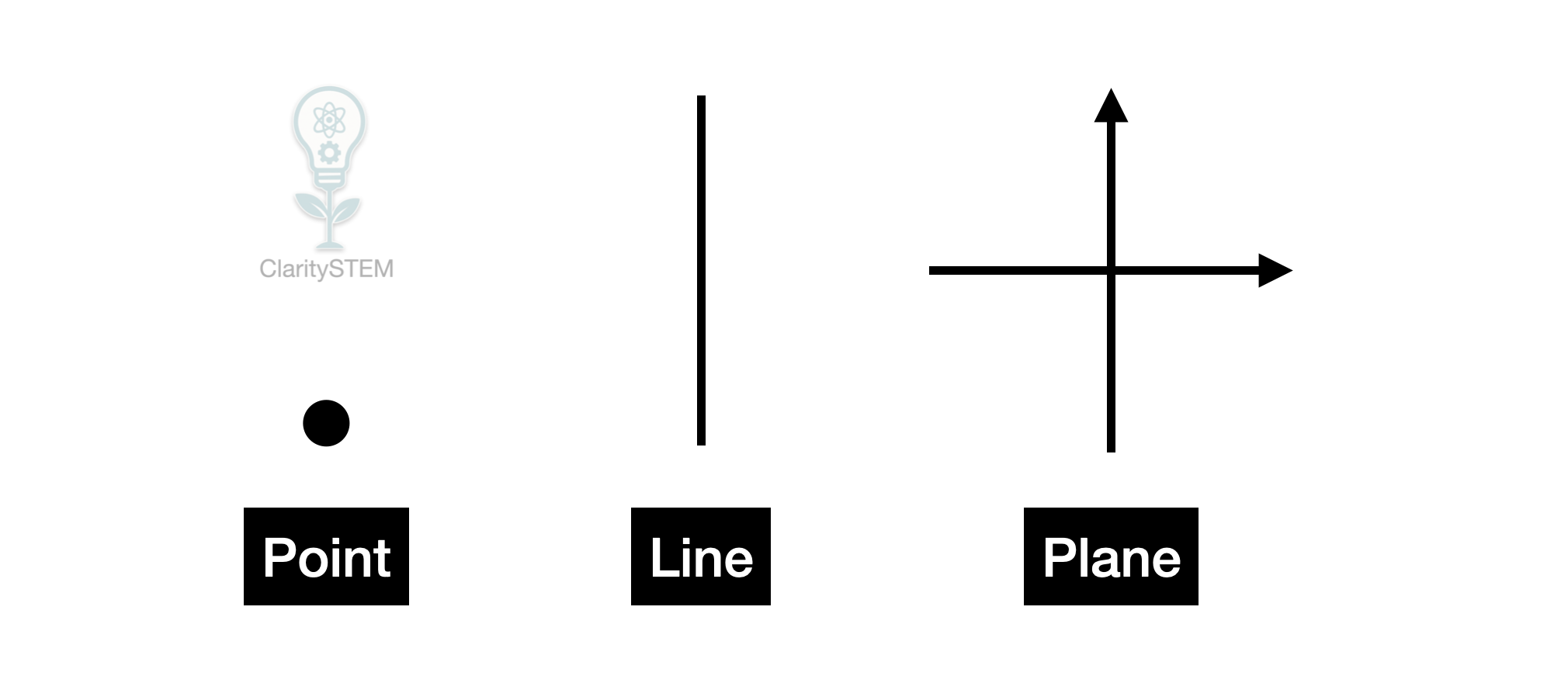
A point shows an exact position in space. It has no size or shape and is usually shown as a small dot.
A line has length but no width. It extends infinitely in both directions.
A plane is a flat surface that extends infinitely in all directions. A piece of paper can be used to represent part of a plane.
Horizontal, Vertical and Diagonal
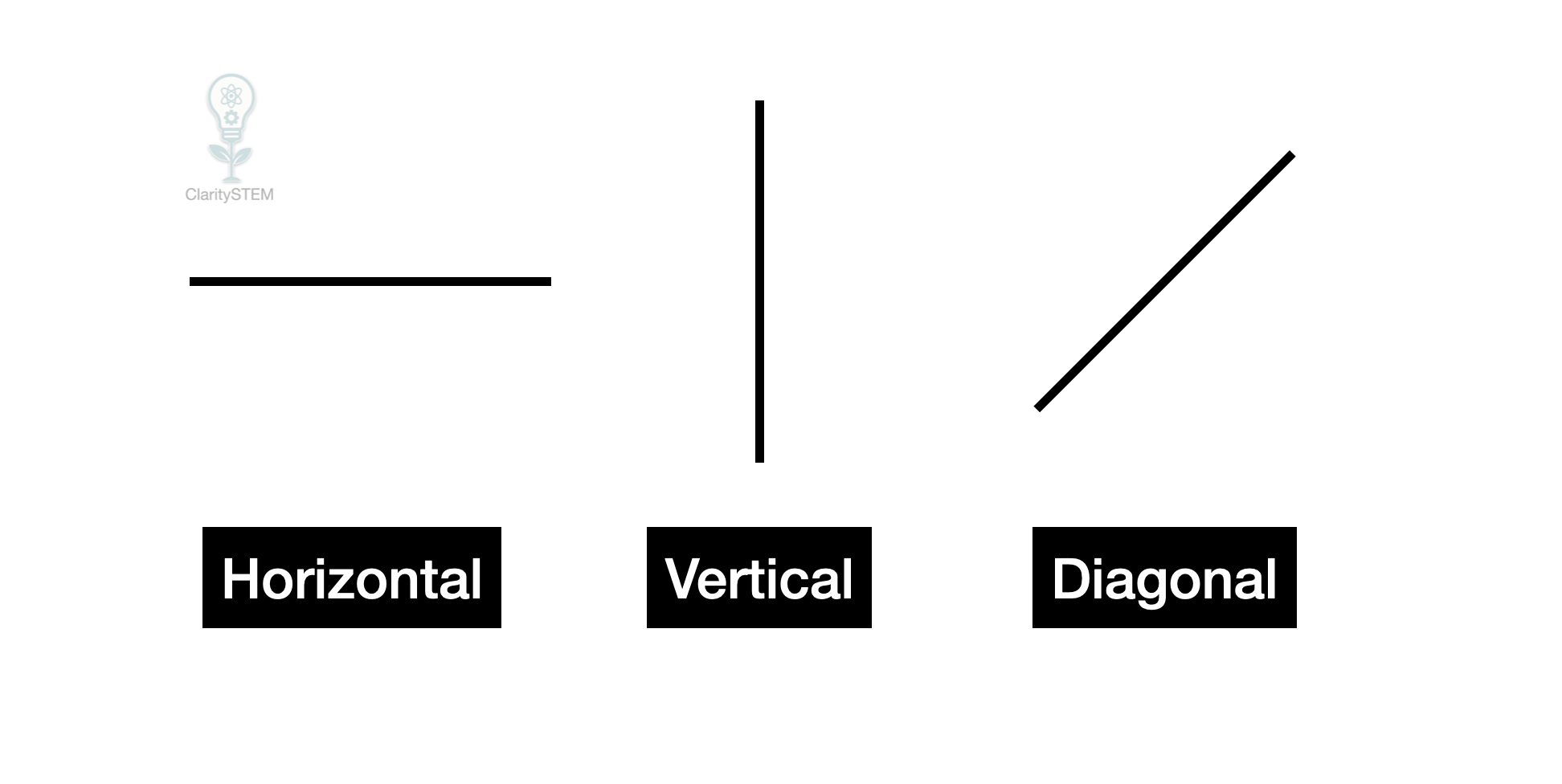
A horizontal line runs left to right and is parallel to the horizon.
A vertical line runs up and down and is perpendicular to the horizon.
A diagonal line slopes and is neither horizontal nor vertical.
Midpoint
The midpoint of a line segment is the point exactly halfway along it.
This means the distance from the midpoint to each end of the line segment is equal.
Parallel and Perpendicular
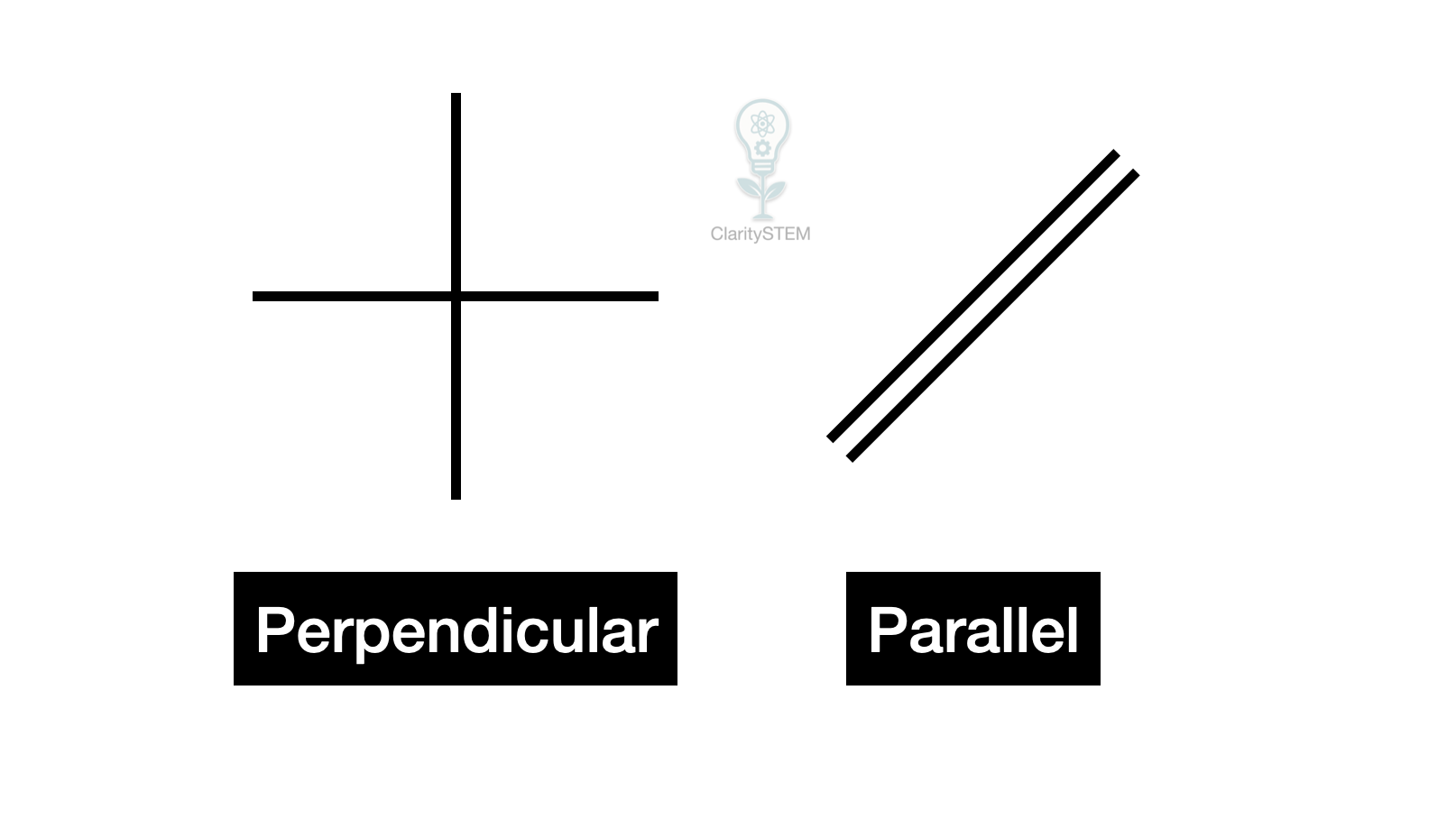
Parallel lines are lines that are always the same distance apart and never meet.
Perpendicular lines meet at a right angle.
Clockwise and Anticlockwise Turns
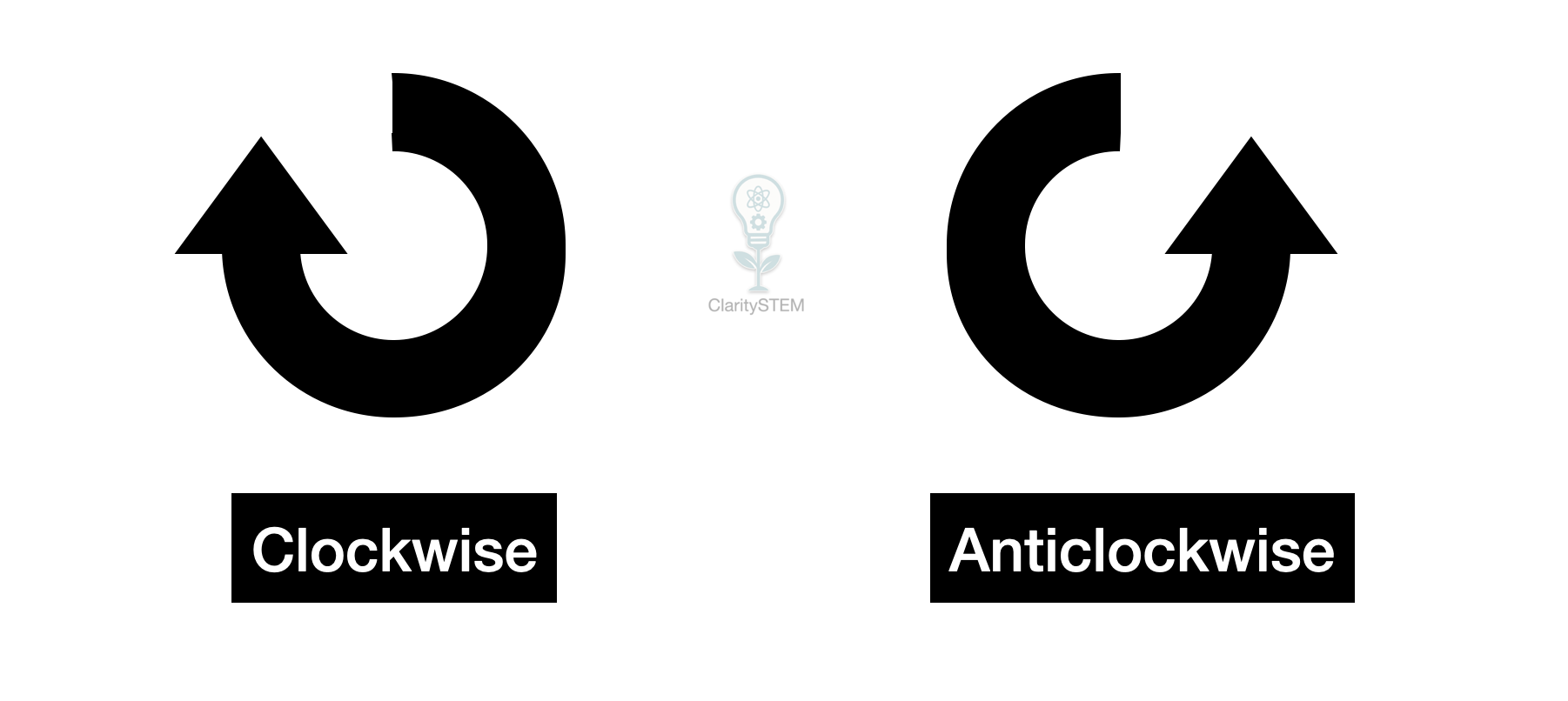
A clockwise turn is a turn in the same direction as the hands of a clock.
An anticlockwise turn is a turn in the opposite direction to the hands of a clock.
Turns can be described using fractions of a full turn, such as a half turn or a quarter turn.
Angles
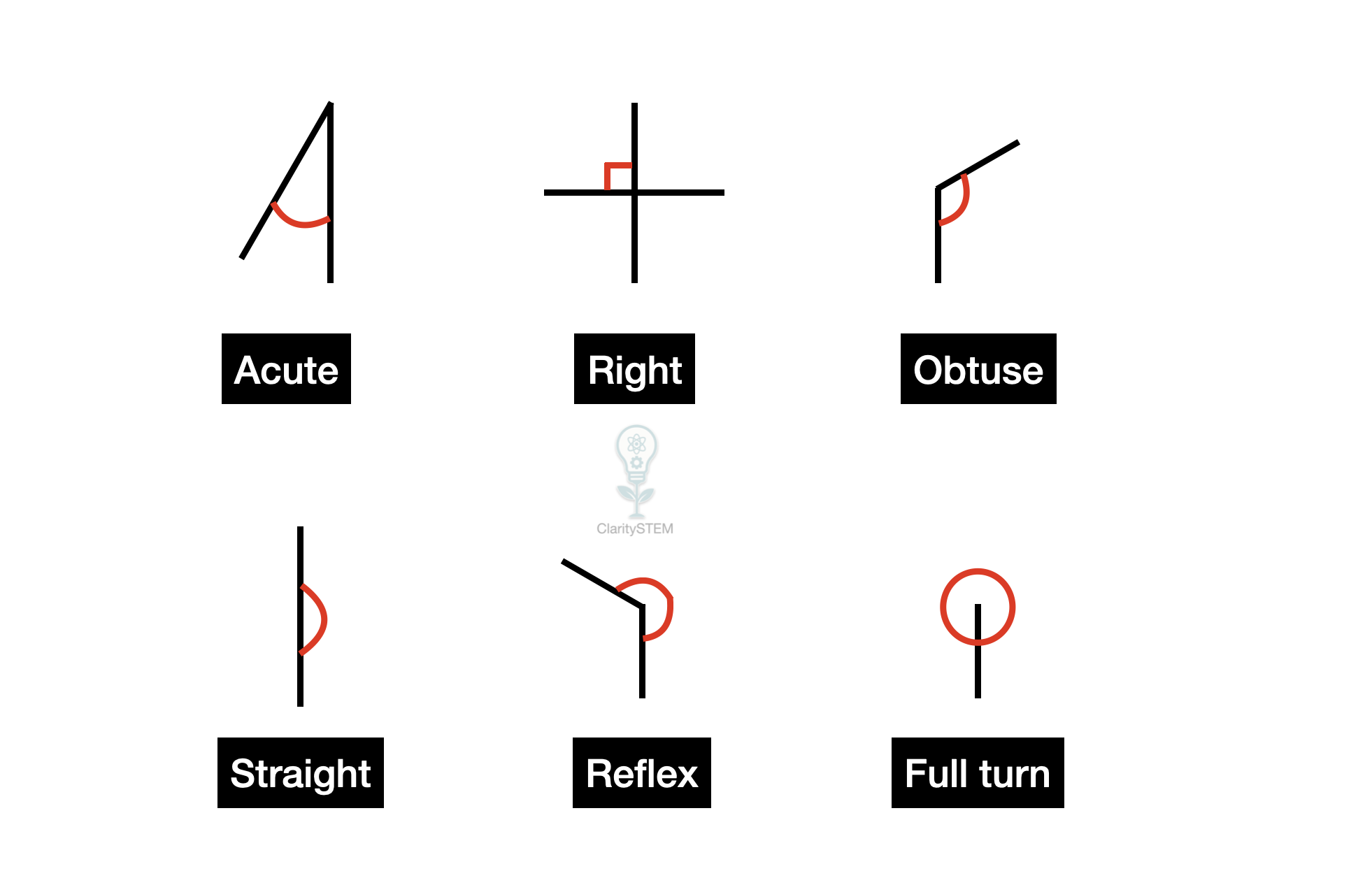
An angle is formed when two lines meet at a point.
• An acute angle is less than a right angle
• A right angle is a quarter turn
• An obtuse angle is greater than a right angle but less than a straight angle
• A straight angle is a half turn
• A reflex angle is greater than a straight angle but less than a full turn
• A full turn is a complete rotation
Interior and Exterior Angles
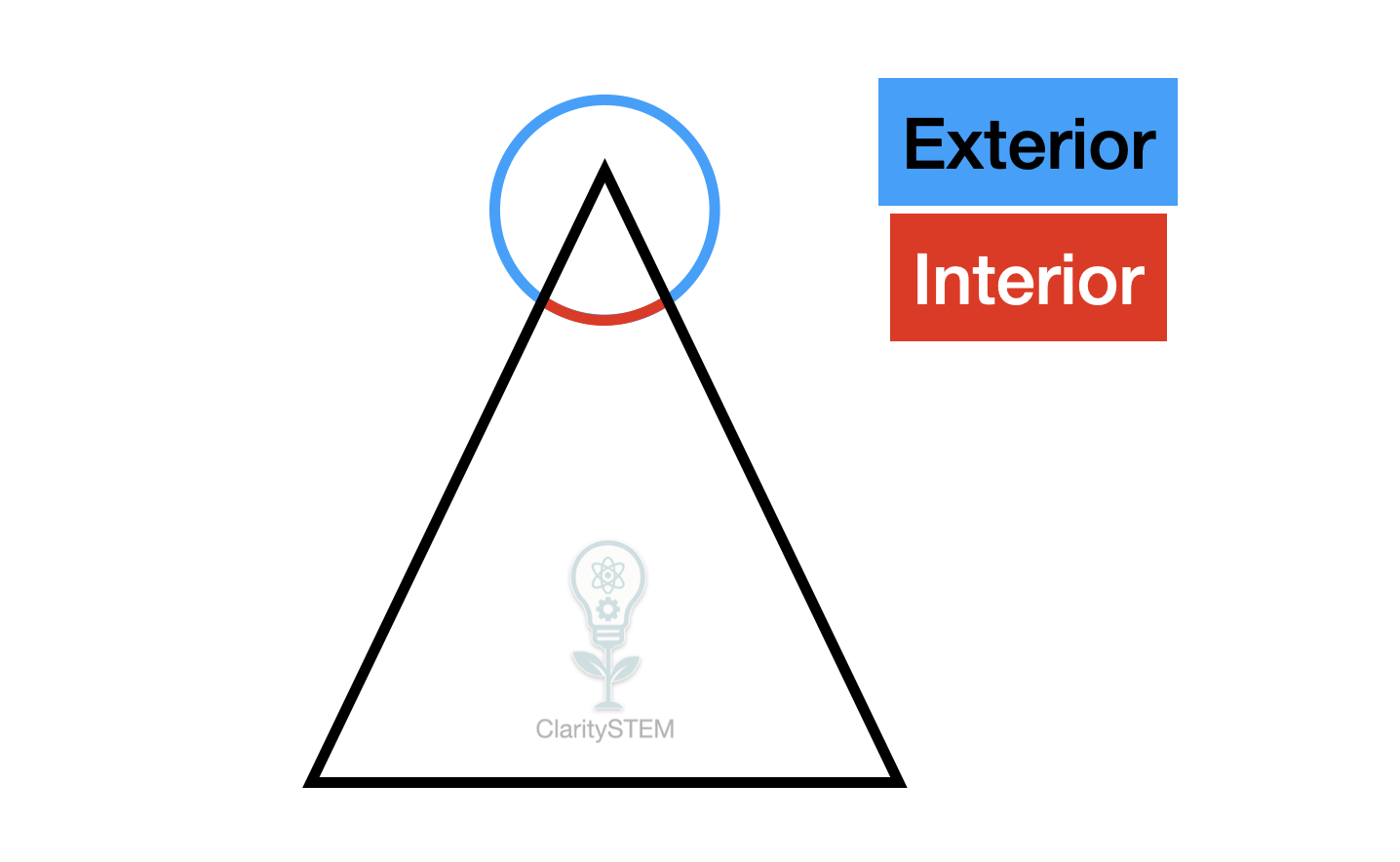
Interior angles are angles found inside a shape.
Exterior angles are angles formed outside a shape when one side is extended.
Faces, Edges and Vertices
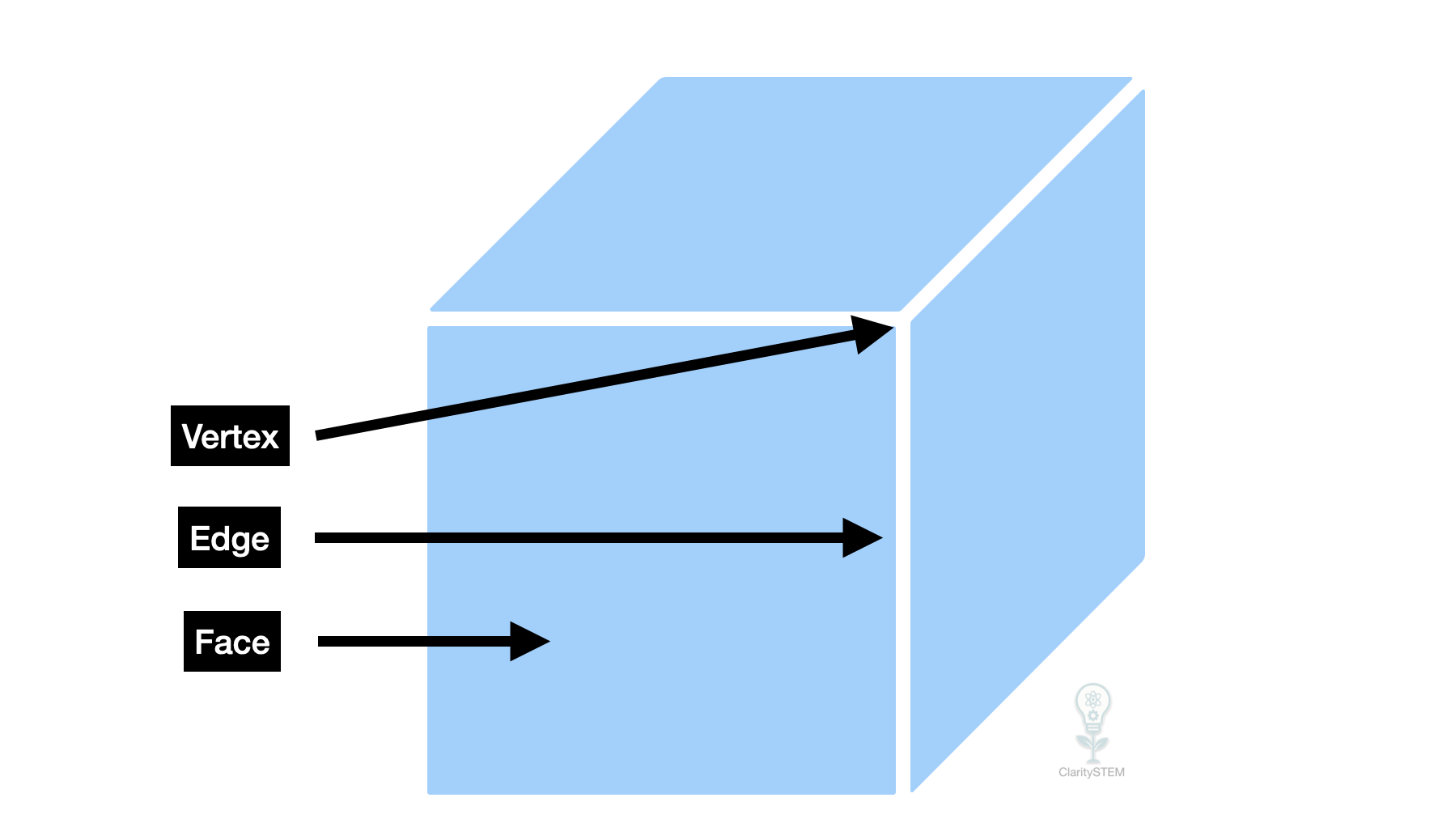
These terms are used to describe three dimensional shapes.
• A face is a flat surface of a shape
• An edge is a line where two faces meet
• A vertex is a corner where edges meet
Key Points to Remember
Geometric terms allow shapes and diagrams to be described precisely.
Lines can be horizontal, vertical or diagonal depending on their direction.
Parallel lines never meet and perpendicular lines meet at right angles.
Angles are classified by their size and amount of turn.
Faces, edges and vertices describe the parts of three dimensional shapes.
Using correct geometric language helps you communicate mathematical ideas clearly and accurately.