
Accurate Constructions Using Ruler, Protractor and Compasses
This topic covers how to accurately draw geometric constructions using standard instruments. Precision and method are essential, especially when constructing bisectors, shapes and loci.
Angle Bisector
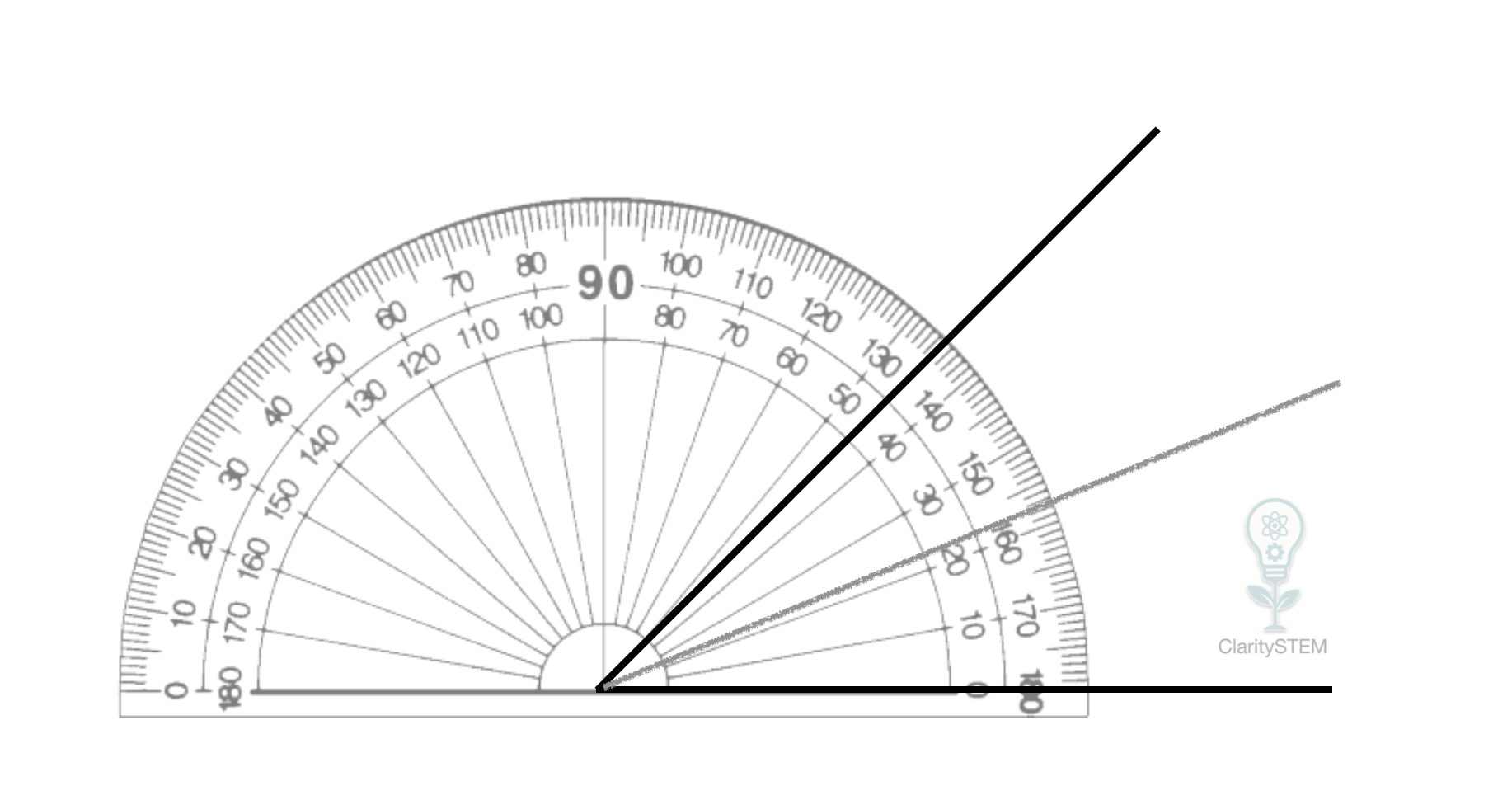
An angle bisector is a straight line that divides an angle into two equal angles.
To construct an angle bisector accurately:
• draw the angle clearly using a ruler
• place the centre of the protractor on the vertex
• measure the size of the angle
• calculate half of the angle
• mark this value on the protractor
• draw a straight line from the vertex through the mark
The two new angles formed are equal in size.
Perpendicular Line Bisector
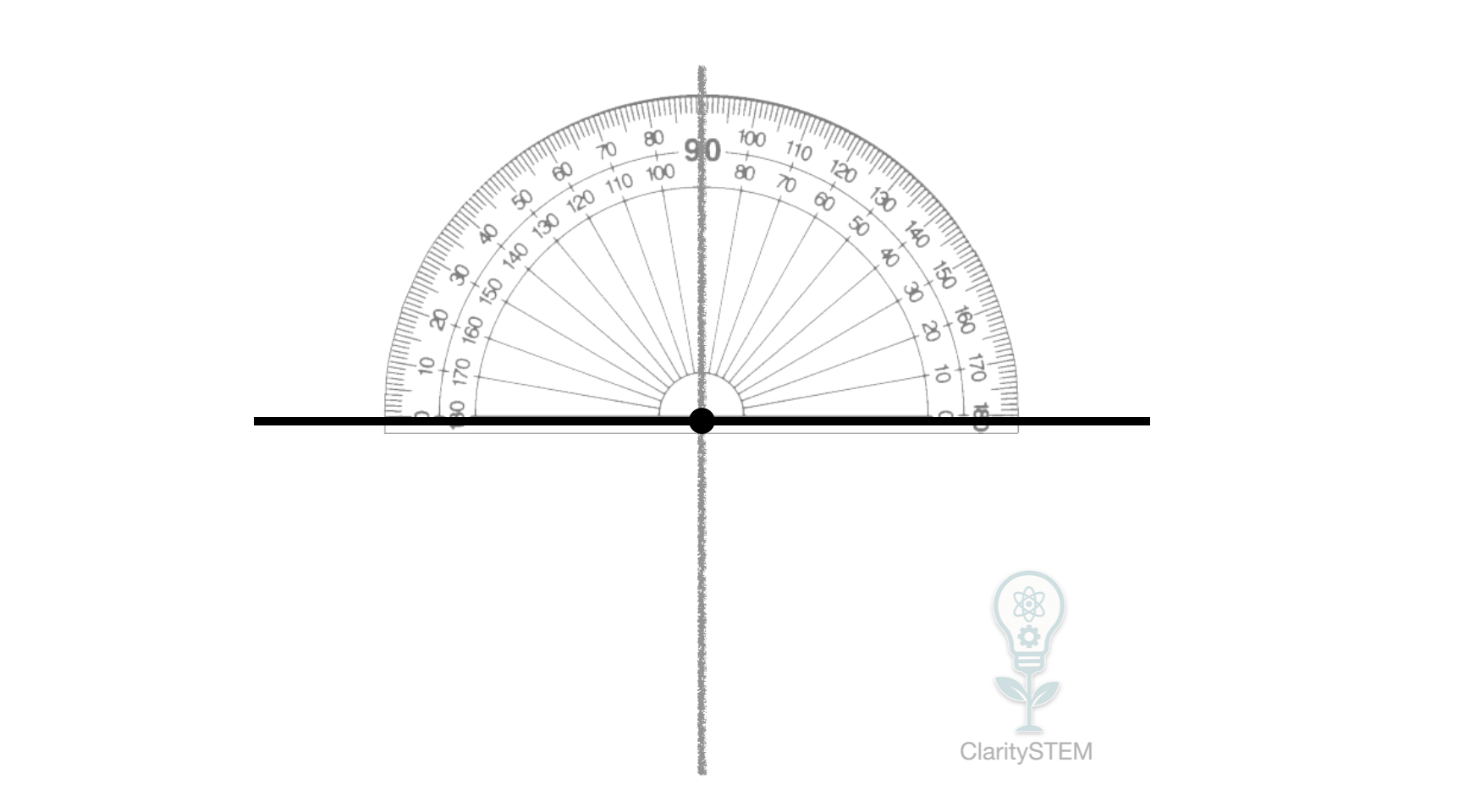
A perpendicular bisector cuts a line segment into two equal lengths at a right angle.
To construct a perpendicular bisector:
• draw the given line segment
• find the midpoint by measuring the line
• place the protractor at the midpoint
• draw a line at a right angle to the original line
This new line is perpendicular to the original and bisects it exactly.
2-D Shapes Given Side Lengths and Angles
Many 2-D shapes can be constructed accurately when side lengths and angles are given.
For shapes such as rectangles or parallelograms, a ruler and protractor are usually sufficient.
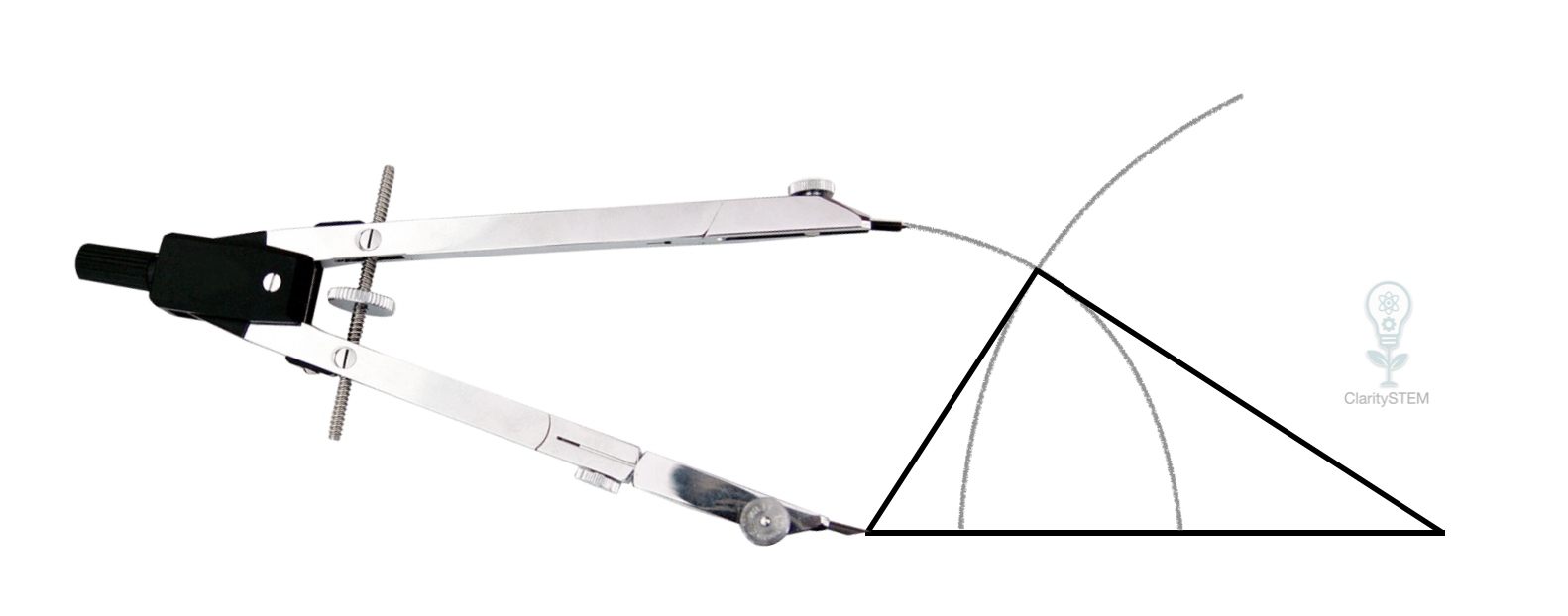
For triangles where three side lengths are given, compasses are required.
To construct a triangle using three sides:
• draw one side to the correct length
• set the compass to the length of the second side and draw an arc
• set the compass to the length of the third side and draw an arc from the other endpoint
• where the arcs intersect is the third vertex
• join the vertices using a ruler
The accuracy of the triangle depends on keeping the compass width fixed
Loci of Points
A locus is the path traced by a point that moves according to a given rule.
Loci are usually drawn as lines or curves showing all possible positions of the point.
Locus at a Given Distance from a Fixed Point or Line
The locus of points at a fixed distance from a point is a circle.
• place the compass point on the fixed point
• set the compass to the given distance
• draw the circle
The locus of points at a fixed distance from a straight line consists of two parallel lines, one on each side of the given line.
Compasses are used to keep the distance constant.
Equidistant from Two Fixed Points or Lines
The locus of points equidistant from two fixed points is the perpendicular bisector of the line joining the points.
The locus of points equidistant from two parallel lines is a line halfway between them.
The locus of points equidistant from two intersecting lines is the angle bisector of the angle formed.
Key Points to Remember
Angle bisectors divide angles into two equal parts.
Perpendicular bisectors cut line segments in half at right angles.
Compasses are essential for constructing triangles from three sides.
A locus shows all possible positions that satisfy a condition.
Accuracy depends on careful measuring and steady use of instruments.
Accurate construction skills allow geometric problems to be solved visually and precisely using standard mathematical tools.